
Remote Anchorage Dental Implants - Valdosta, GA
Advanced Implants for Patients With Bone Loss

Turned Away From Dental Implants? You May Still Be a Candidate
If you’ve visited a dentist or oral surgeon and were told that dental implants aren’t possible for you because of insufficient bone, you are not alone. Bone loss is one of the most common reasons patients are turned away from traditional implant treatment. For many patients, the news feels final. But it doesn’t have to be.
At Bemiss Implant Center in Valdosta, GA, Dr. Mitesh Brahmbhatt offers remote-anchorage dental implants, an advanced category of implant solutions designed for patients who lack adequate bone in the upper or lower jaw. Rather than relying on the standard jawbone for support, these techniques anchor implants into alternative bone structures that are dense, stable, and highly reliable.
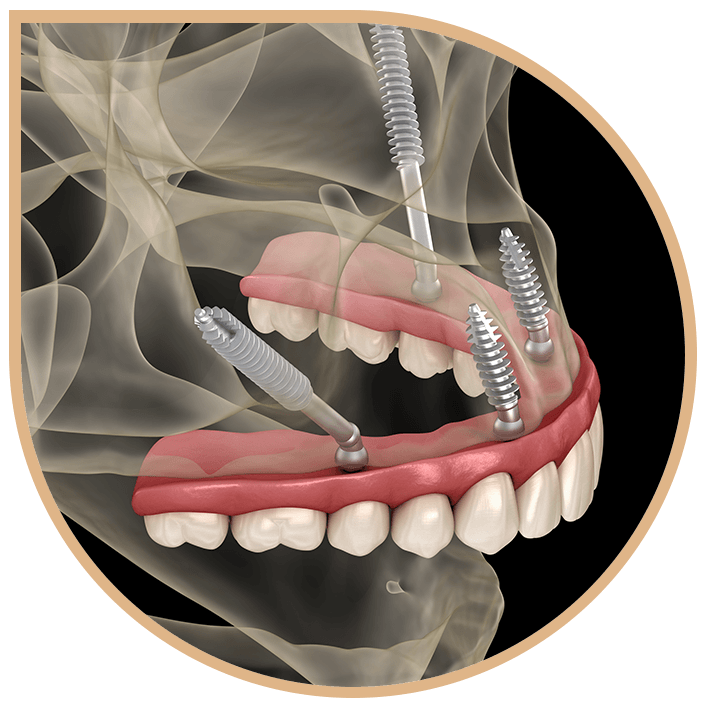
What Are Remote Anchorage Dental Implants?
Remote anchorage dental implants are specialized implant techniques that bypass the conventional jawbone (alveolar ridge) and instead anchor into other strong bone structures in the skull and face. These alternative anchor points, including the cheekbone (zygoma), the pterygoid plates at the back of the skull, and bony structures near the nasal and sinus cavities, provide the solid foundation needed to support a full arch of teeth.
These implants are longer than traditional implants and are placed at strategic angles to engage the most durable available bone. Because they are anchored far from the compromised jawbone, the deficiency of local bone becomes a much less significant barrier to treatment. Remote anchorage implants are most commonly used as part of a full-arch restoration, allowing patients with severe bone loss to receive a fixed, permanent set of teeth, often on the same day as surgery.
Who Is a Candidate for These Advanced Implant Solutions?
- Have been told you lack enough bone for traditional implants
- Have experienced significant bone loss in the upper jaw
- Have been wearing dentures for many years
- Have been diagnosed with severe atrophy of the jawbone
- Want to avoid or cannot undergo bone grafting procedures
- Have previously failed traditional implant treatment due to bone volume
- Are seeking a faster path to a permanent smile restoration

We Offer Multiple Options to Suit Every Need
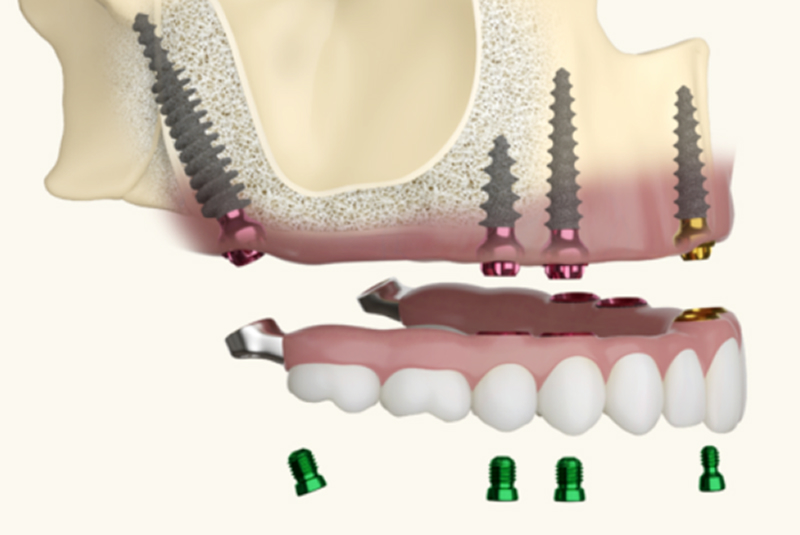
Zygomatic implants are the most widely used remote anchorage solution for patients with severe upper jawbone loss. Instead of anchoring into the upper jawbone, zygomatic implants are placed into the zygomatic bone, commonly known as the cheekbone. The cheekbone is exceptionally dense and does not deteriorate the way the jawbone does after tooth loss, making it an extremely reliable anchor point.
Zygomatic implants are significantly longer than conventional implants, typically ranging from 30 to 52.5 millimeters. They are placed at a precise angle through the upper jaw and into the cheekbone, where they integrate securely. Because of this remote anchor point, patients with virtually no usable bone in the upper jaw can still receive a full arch of fixed teeth. Benefits of zygomatic implants include:
• No bone grafting is required in the vast majority of cases
• Possibility of receiving teeth on the same day as surgery
• Proven clinical track record of over two decades of use worldwide
• Stable, long-term results even in cases of extreme bone deficiency
• Shorter overall treatment timeline compared to grafting and waiting
Pterygoid implants are placed into the pterygoid plates, a pair of dense bony structures located at the back of the skull, just behind the upper jaw. This area is composed of very dense cortical bone that remains stable even after significant upper jawbone loss. Because of their anchorage, pterygoid implants provide exceptional support at the posterior (back) of the upper arch, which is often the region most difficult to treat with conventional implants.
Pterygoid implants are placed at a specific angulation that allows them to engage the pyramidal process of the palatine bone and the pterygoid plates of the sphenoid bone. This technique is often used in combination with anterior or zygomatic implants to create a complete arch restoration. Benefits of pterygoid implants include:
• Engages dense, reliable bone not affected by typical jawbone loss
• Eliminates the need for sinus lift procedures in many cases
• Provides strong posterior support for a full arch restoration
• Can often be loaded with a temporary prosthesis on the day of surgery
• Proven technique with decades of supporting research
Transnasal implants are a specialized remote-anchorage technique in which implants are placed through the lateral nasal wall and anchored to the bone surrounding the nasal cavity. This approach is used when a patient has bone loss in the anterior (front) region of the upper jaw, an area where traditional implants cannot be placed without extensive grafting.
The nasal floor and surrounding nasal bone structures offer a reliable, dense anchor point that is largely unaffected by the bone resorption that follows tooth loss. Transnasal implants are carefully angled to pass through or alongside the nasal cavity and achieve secure fixation in this durable bone.
Benefits of transnasal implants include:
• Provides anterior support in patients with front upper jaw bone deficiency
• Works in cases where both traditional implants and sinus-based solutions are not viable
• Avoids the need for extensive bone grafting in the anterior maxilla
• Can be combined with other remote anchorage techniques for a comprehensive arch solution
• Expands treatment eligibility for patients with complex anatomy
Trans-sinus implants are placed through the maxillary sinus, the air-filled cavity located on either side of the nose within the upper jaw. Rather than avoiding the sinus, as is the goal with traditional sinus lift procedures, trans-sinus implants are intentionally designed to pass through this space and anchor into the bone on the far side, or into the sinus walls themselves.
This technique is used when a patient has a significantly enlarged sinus (a condition called sinus pneumatization) that has expanded downward into the space where the upper back teeth once were, leaving very little bone height for conventional implants. By intentionally engaging the sinus and anchoring beyond or within it, trans-sinus implants turn a limiting anatomical feature into a usable anchor point. Benefits of trans-sinus implants include:
• Designed specifically for patients with enlarged maxillary sinuses
• Eliminates the need for sinus lift bone grafting procedures
• Reduces treatment time significantly compared to traditional grafting approaches
• Provides strong support in the posterior upper jaw, where bone is typically most deficient
• Can be used in combination with other remote anchorage techniques
Why Choose Bemiss Implant Center for Remote Anchorage Implants?
Remote anchorage implants are among the most technically demanding procedures in implant dentistry, and not every provider has the training, experience, or technology required to offer them safely and effectively. Dr. Brahmbhatt is a Diplomate of the International Dental Implant Association and an affiliate of the American Academy of Implant Dentistry and the International Congress of Oral Implantologists, bringing more than two decades of experience and advanced training from institutions such as the Pikos Institute and CDOCS to even the most complex remote anchorage cases.
What to Expect from the Treatment Process
Step 1: Consultation and Imaging
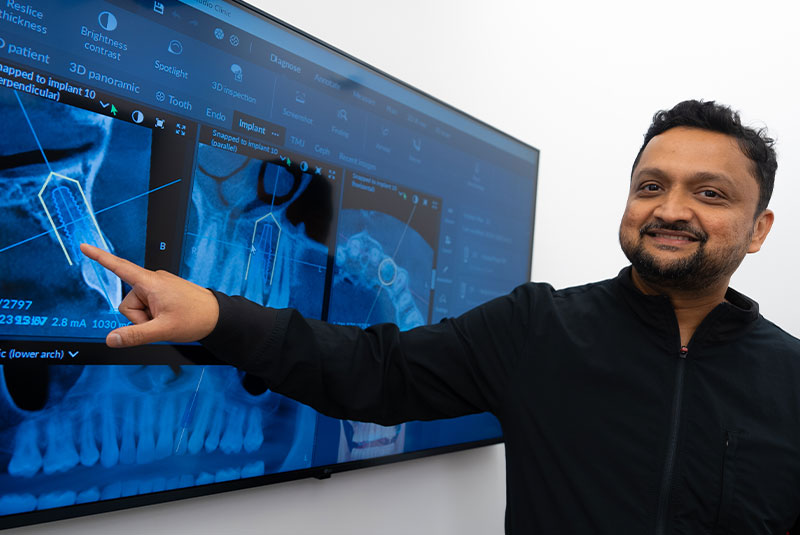
Your journey begins with a comprehensive consultation at our Valdosta office. Dr. Mitesh will perform a 3D cone beam CT scan and evaluate your bone anatomy in detail to determine whether remote-anchorage implants are the right solution for you and which techniques best suit your needs.
Step 2: Custom Treatment Planning
Using advanced software, Dr. Mitesh creates a fully customized surgical plan based on your unique anatomy. The placement angle, length, and type of each implant are precisely mapped before surgery begins.
Step 3: Implant Surgery
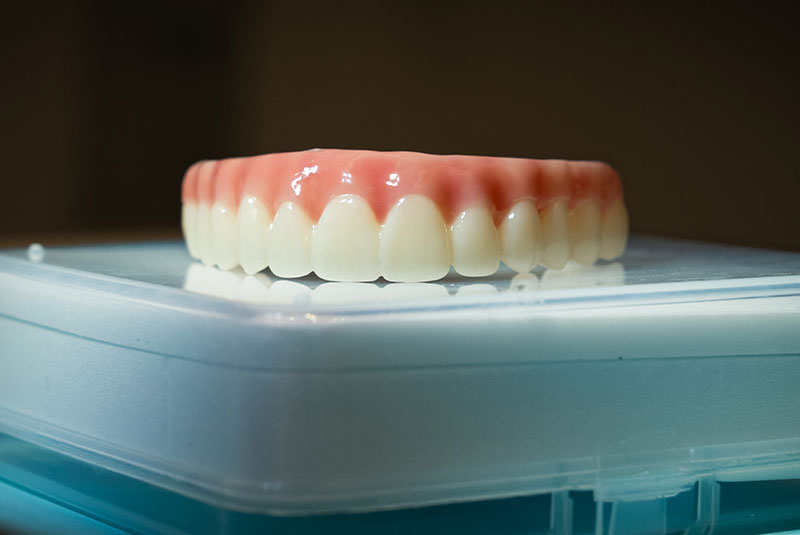
On your surgery day, your chosen sedation option will be administered to keep you comfortable. Dr. Mitesh then places your remote anchorage implants with precision and care. In many cases, a temporary full arch of teeth is attached the same day.
Step 4: Healing and Integration
Over the following months, your implants will integrate with the surrounding bone through a process called osseointegration. You will attend follow-up appointments so Dr. Mitesh can monitor your healing.
Step 5: Final Restoration
Once your implants have fully integrated, your final, permanent prosthetic teeth are fabricated and placed. The result is a natural-looking, stable, fully functional smile.
Frequently Asked Questions About Remote Anchorage Dental Implants
For many patients, that answer is no longer accurate. Remote anchorage implants were developed precisely for patients who have been told traditional implants are not possible. While not every patient is a candidate for every technique, the majority of people with significant bone loss can be treated using one or more remote anchorage approaches. The first step is a consultation so Dr. Mitesh can evaluate your specific anatomy.
In most cases, no. One of the primary advantages of remote anchorage implants is that they are designed to bypass areas of bone deficiency and anchor into alternative, healthy bone structures. This eliminates the need for bone grafting in the majority of patients and significantly shortens the overall treatment timeline.
With proper care and maintenance, remote anchorage implants are designed to be a long-term, permanent solution. Clinical studies on zygomatic implants, in particular, have demonstrated excellent long-term survival rates of 10 years and beyond. The longevity of your implants depends on your overall health, oral hygiene habits, and regular follow-up care with your dental team.
During surgery, you will be fully anesthetized or sedated based on the option you and Dr. Mitesh select together, so you will not feel pain during the procedure. There will be some discomfort and swelling during the initial healing period, which is managed with prescribed medications. Most patients find recovery more manageable than they anticipated.
In many cases, a full arch of provisional (temporary) teeth can be attached on the same day as your surgery. You will leave the office with a functional smile. Your final permanent restoration will be placed after your implants have fully integrated, typically several months later.
Yes. Zygomatic implants, the most studied of the remote anchorage techniques, have a well-documented safety and efficacy record going back more than 25 years. Pterygoid, transnasal, and trans-sinus implants are also established techniques performed by trained implant specialists worldwide. At Bemiss Implant Center, Dr. Mitesh combines his advanced training with Yomi robotic guidance technology to ensure the highest level of safety and precision.
The cost varies depending on the techniques required, the number of implants placed, and the type of final restoration. Because these are specialized procedures, the investment is comparable to full-arch implant treatment. Bemiss Implant Center offers financing options to make treatment accessible. The best way to get an accurate cost estimate is to schedule your consultation so Dr. Mitesh can develop your custom treatment plan.
Yes. Many patients who come to us for remote anchorage implants have been wearing full or partial dentures for years and are looking for a more stable, permanent solution. Long-term denture wear is actually one of the most common causes of the bone loss that leads patients to need this type of specialized treatment.
Remote anchorage implants are most commonly used in the upper jaw, where bone loss is most severe and traditional implant placement is most limited. The lower jaw often retains more bone and may be better suited to conventional implants, All-on-X techniques, or other solutions. Dr. Mitesh will evaluate your full oral anatomy and recommend the most appropriate approach for each arch.
Am I A Candidate for Implants?
Schedule An Appointment
I understand the information disclosed in this form may be subject to re-disclosure and may no longer be protected by HIPAA privacy regulations and the HITECH Act.
Find out if you're a
candidate for dental implants
Answer the Following Questions To Learn more about our pricing and financing options.